
In 2020 Honda sold 1.627 million cars in China. In 2025 it sold 645,300. The collapse was not Honda's alone: as new energy vehicles passed half of China's new-car market in 2025, joint-venture brands built around petrol engines lost volume, cut capacity and dropped models. Some of what was already built is now looking for buyers abroad. For an importer that can be a genuine opportunity or an expensive mistake, and the difference lies in a handful of checks.
What happened in China
For two decades, joint ventures between foreign and Chinese carmakers dominated China's petrol car market. The shift to battery-electric and plug-in hybrid vehicles, led by domestic brands and accelerated by a long price war, changed that within a few years. The consequences for the joint ventures are visible in their own announcements:
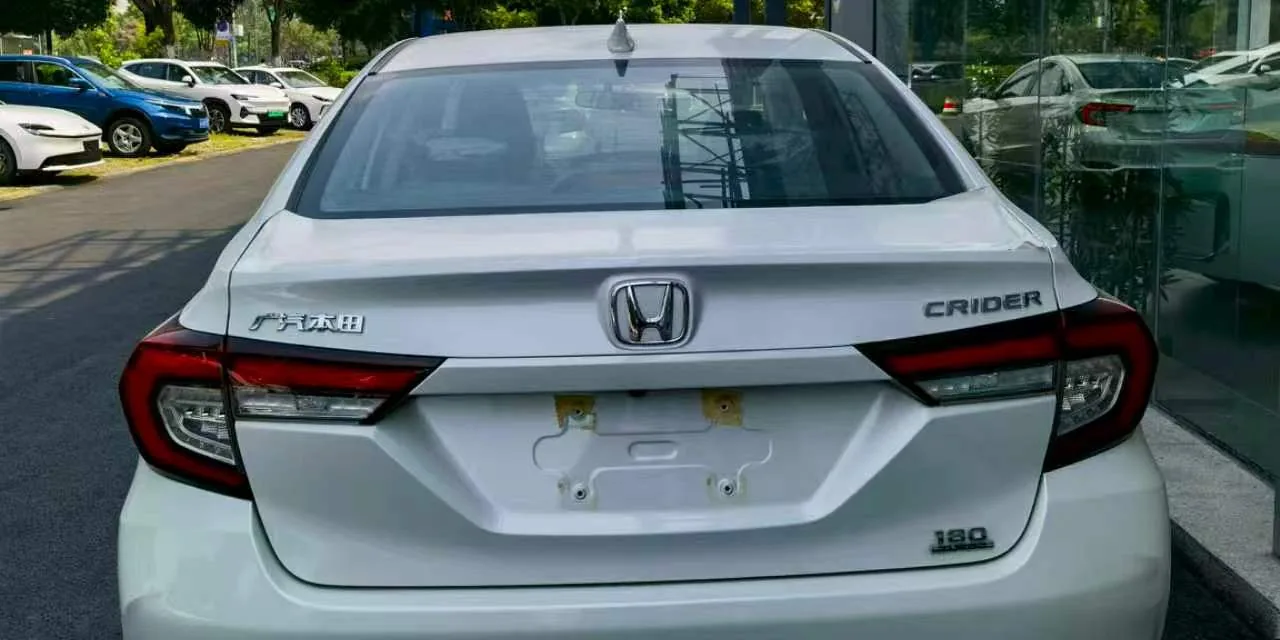
- Models leave the line-up. The Honda Crider, a staple compact sedan for years, ended with the 2024 model year.
- Plants close or lose lines. In April 2026, GAC Honda said that the older plant which had mainly built the discontinued Crider would stop production in June 2026, while Honda's other Chinese joint venture said it would stop some production lines.
- Stock outlives production. Cars built before a model is discontinued, or before capacity is cut, remain in dealer and distributor inventory and have to be sold somewhere.
How that stock reaches export
There are three routes, and they are not equivalent:
- Manufacturer channels. Joint ventures and their authorised exporters ship new cars abroad under the manufacturer's export licence, sometimes into markets where the brand has its own distributor.
- Registered vehicles through the used-vehicle channel. Until the end of 2025 this was the fast route for dealer stock: register, transfer for export, ship. Since 1 January 2026, vehicles registered within 180 days need the manufacturer's after-sales service confirmation, as explained in our guide to the 2026 rule.
- Unregistered stock through qualified exporters, subject to the licence rules for new vehicles.
Which route a car takes determines its documents, how your customs office classifies it, and whether any manufacturer support exists in your country. It is the first question to ask about any offer.
Where it is a bargain
- Proven engineering. A model at the end of its life has had its early faults found and fixed. The Crider's current generation had been in production since 2018.
- Petrol where petrol still makes sense. In markets where charging is scarce, grids are unreliable or fuel is cheap, a well-understood petrol car is often the practical choice. Our reasoning on matching powertrain to infrastructure is in battery electric or range extender.
- Price. Stock that has to clear is priced to clear. The question is whether the discount covers the costs that come with it.
Where it is a liability
- Age. A new car from a discontinued line may have been built long ago. Tyres, battery and fluids age in storage: see buying a new car that has been in stock.
- Parts and service. In China, the existing fleet keeps parts flowing. In a market where the model was never sold officially, you are the parts network. The plan that makes this workable is in servicing a Crider outside China.
- Warranty. Manufacturer warranty on China-market cars runs through Chinese dealers, not abroad.
- Resale. A model unknown in your market resells at a discount to the ones people recognise. Price your exit before you price your entry.
- Specification. China-market cars are left-hand drive, with Chinese interfaces and connected services that stop working abroad.
How to evaluate an offer
| Question | Good answer | Warning sign |
|---|---|---|
| Which export route? | Stated in writing, with the document list | Vague, or "we handle it" |
| Registered in China? When? | A date, or a clear "never registered" | Unknown, or registered weeks ago with no mention of the 2026 rule |
| Build month? | From the nameplate, photographed | Only a model year |
| Version and equipment? | Confirmed item by item on the unit | A version name only |
| Parts? | A quoted first-service and collision kit | "Parts are available everywhere" |
| Landed cost? | Built up from price, freight, insurance, duties and preparation | A comparison of invoice prices only |
What to expect next
More joint-venture petrol models are likely to leave Chinese line-ups as capacity adjusts to a market where new energy vehicles are the majority, and more of the last-built units will look for export buyers. At the same time, China is tightening export governance: the 2026 rule on recently registered vehicles, and export licence management for pure electric passenger cars from the same date, both push trade toward exporters that can document the route and support the car. For buyers, that is good news. It means the right questions now have checkable answers.
If you are building a dealer business around vehicles like these, the channel side is covered in building a dealer network for imported vehicles, and the current stock example in the Crider buyer guide.
Honda, Crider and Honda SENSING are trademarks of Honda Motor Co., Ltd. CZJ Motors is an independent vehicle exporter and is not affiliated with, authorised by or endorsed by Honda Motor Co., Ltd. or GAC Honda Automobile Co., Ltd. The names are used only to identify the genuine vehicles we supply and describe.