
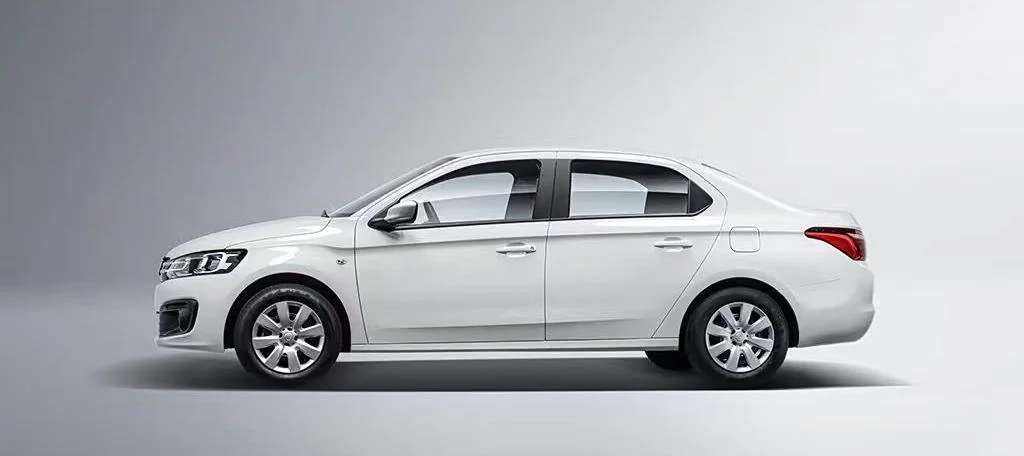
A compact electric sedan can suit taxi or ride-hailing work when its passenger space, operating range, charging plan and equipment match the fleet's actual routes and shift pattern. The T02's stated specifications provide a useful starting point, but they do not by themselves confirm real-world range, local charging compatibility or the right configuration for your market.
Match vehicle size and performance to the service plan
The T02 is listed as a five-seat, four-door compact three-box sedan measuring 4,427 × 1,748 × 1,493 mm, with a 2,652 mm wheelbase. These figures help you assess parking, access to narrow streets and the space available for passengers, but they do not answer whether the rear cabin or luggage area meets your service standard. Request interior dimensions, luggage capacity, door-opening details and photographs or a vehicle inspection focused on the intended use.
Its stated maximum power is 60 kW (82 Ps), torque is 160 N·m and top speed is 100 km/h. Compare these figures with your route profile, passenger and luggage load, gradients, traffic and required road speeds. Ask the supplier to confirm the exact ordered vehicle specification and whether any limits or configuration differences apply. Do not infer acceleration, hill performance or suitability for sustained high-speed operation from peak power and torque alone.
For a sedan intended for frequent passenger service, also define the equipment that affects daily use: air conditioning, seat material, cleaning access, spare wheel or repair kit, safety equipment, telematics, charging cable and any fleet-installed accessories. Confirm what is standard, optional or unavailable for the proposed build.
Interpret the stated range and charging figures carefully
The T02 is listed with a 300 km CLTC pure electric range, a fast-charge time of 0.5 hours from 30% to 80% state of charge, and a slow-charge time of 10 hours. Treat these as stated figures tied to a test cycle and specified charging conditions, not as a promise of taxi distance per shift or a universal charging duration.
Ask for the battery capacity, charging interface and supported AC and DC charging parameters for the exact configuration. Confirm the conditions behind the quoted charging times, including charger output, temperature and whether the time excludes connection, payment, queueing or battery conditioning. Compare those details with the chargers available at your depot and along the planned routes.
Build the fleet assessment around your own operating data: route distance, idle time, shift length, passenger load, air-conditioning use, climate, road conditions, charging access and the time available between shifts. If you do not have measured vehicle data for these conditions, arrange an evaluation under a representative duty cycle before committing to a larger order. For broader fleet-cost planning, see Total Cost of Ownership for Imported Fleet Vehicles.
Confirm steering position, equipment package and order configuration
The T02 is listed with LHD or RHD to order. Specify the steering position in the purchase specification and confirm it again on the pro forma invoice, build documents and final vehicle identification records. Do not assume that a general model description guarantees the steering arrangement or equipment you need.
The cataloged product entry describes the vehicle class and headline performance figures, but does not state battery capacity, charging connector, warranty terms, cabin equipment, safety systems or a specific trim. Request a version-specific build sheet that identifies those items and any market-specific changes. Where a feature matters to fleet operations, define it as a requirement rather than relying on verbal confirmation.
The T02 Compact Electric Sedan page is a useful starting point for comparing the model's stated offer. Have the proposed configuration reviewed against local registration and vehicle approval requirements. Rules can change, so confirm current requirements with the relevant authority; the vehicle homologation guide outlines issues to raise before ordering.
Request documents and evidence before approving the specification
Use a written checklist and ask the supplier to identify evidence for each requirement. Resolve any mismatch between the offer, build sheet and supporting documents before approving production or shipment.
| Requirement to confirm | Evidence to request | Verification step |
|---|---|---|
| Vehicle identity and configuration | Version-specific build sheet, model code and vehicle identification details when available | Check that the same version, steering position and equipment appear across the quotation and order documents |
| Range and battery details | Battery capacity and the test-cycle basis for the stated CLTC range | Confirm the range figure is attributed to the correct configuration; assess duty-cycle suitability separately |
| Charging compatibility | Connector type, AC/DC charging parameters and conditions behind the quoted charging times | Compare with the fleet's depot and route chargers; obtain written confirmation for the ordered version |
| Passenger and luggage suitability | Cabin and luggage measurements, seating details and relevant inspection material | Compare with your passenger service requirements and inspect a representative vehicle where practical |
| Market approval and import documents | Available vehicle, origin and technical documents for the proposed order | Ask the destination authority or qualified local adviser to confirm current requirements |
| After-sales and parts support | Written warranty terms, exclusions, service process and parts arrangements | Confirm who is responsible, which parts are covered and how claims are handled in the destination market |
A catalog entry alone does not establish a warranty, certification, stock position or delivery schedule. Put those commercial and support terms in the order documents and verify documents with the issuing party where appropriate.
FAQ
Is the 300 km CLTC figure a guaranteed taxi shift range?
No. It is a stated CLTC range figure, not a guarantee of distance under your routes, climate, passenger loads or driving pattern. Use it for initial screening, then ask for test evidence relevant to your duty cycle or evaluate a vehicle in representative operating conditions.
Does the listed 30-minute fast-charge time apply to every charger?
No. The stated figure is for charging from 30% to 80% state of charge, and the available information does not specify all charger or operating conditions. Confirm the exact vehicle's charging interface and parameters, and ask the supplier to document the conditions behind the time claim.
Can the T02 be ordered with right-hand drive?
The listed steering-position option is LHD or RHD to order. Confirm the required position in writing for the exact configuration and verify it in the final order and vehicle documents.
What should be settled before approving a fleet order?
Agree the vehicle version, steering position, equipment, battery and charging details, applicable documents, warranty terms and destination-market requirements. Verify the claims that affect your purchase against version-specific documents and the relevant local authority.
To prepare a project brief, share the required specifications, quantity, destination, LHD or RHD preference, planned routes and shifts, charger details, equipment package and any existing project or approval requirements. Use discuss requirements to send the brief for review.