
A car can be new and still be two years old. Discontinued models, overstocked dealers and export inventory all produce vehicles that have never been registered or driven but have spent a long time standing. Standing is not neutral: tyres, batteries, fluids and brake discs age with the calendar, not with the odometer. This is how to establish how long a new car has waited, and what to do about it before it ships.
1. Why new stock can be old
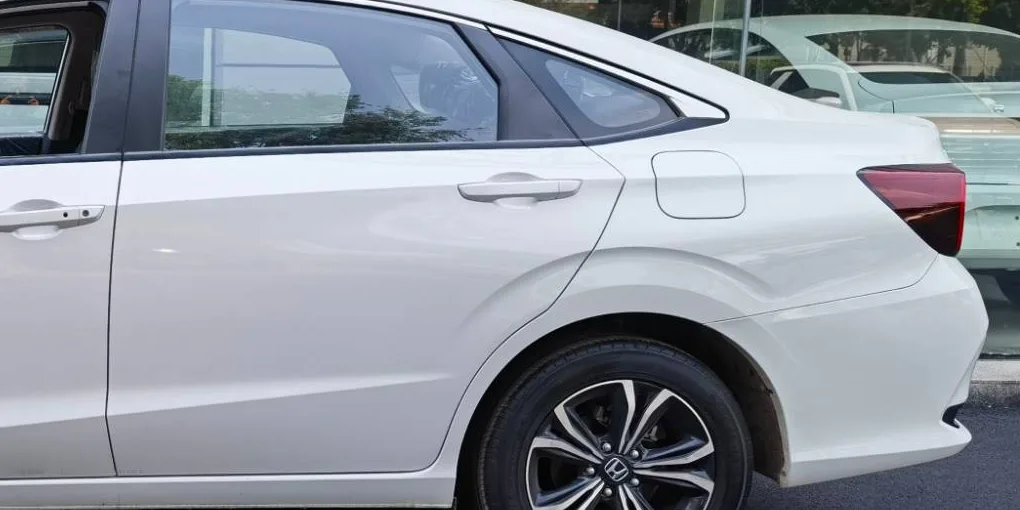
Three situations produce new cars with real age on them. A model is discontinued and the last production run is sold off over the following year or more. A dealer overstocks during a price war and carries inventory into the next model year. Or a car sits in an export yard waiting for a buyer, a licence or a vessel. The Honda Crider units in our own stock are the first case: the model's final year was 2024, so every new Crider on the market today was built before production ended.
None of this makes the car a bad buy. It makes the build month a piece of information you need, in the same way you need the mileage on a used car.
2. Establish the build month first
Three sources, in order of reliability:
- The manufacturer's nameplate. In China, every vehicle must carry a permanent product nameplate, and it must state the brand, the model, the manufacturer, the country of manufacture and the month and year of manufacture. On passenger cars it is usually on a door pillar. Photograph it; it is the single most useful fact about a stock car.
- The factory certificate. The vehicle's factory certificate carries the manufacture date alongside the VIN and engine number.
- The VIN. The tenth character is the model year, not the build date. A 2024 model-year car can have been built in 2023: the Crider's 2024 model year went on sale in May 2023. Use the VIN to confirm the model year you are paying for, and the nameplate for the age.
3. Tyres
Tyres age whether or not they turn. Most carry a four-digit date code on one sidewall, usually at the end of a sequence that begins with "DOT": the first two digits are the week and the last two the year, so 2324 means the 23rd week of 2024. Check every tyre, including the spare if one is fitted; a mismatched date usually means a replacement, and a replacement on a "new" car needs an explanation.
What to look for on a car that has stood:
- Flat spots from months without rotation. They usually round out after some driving but cause vibration at first delivery, which customers notice.
- Surface cracking in the sidewall and between tread blocks, a sign of ozone and ultraviolet exposure. Fine surface crazing is cosmetic; cracks you can open with a fingernail are not.
- Pressure loss. Record the pressures found, not only the pressures set.
Tyre makers' published guidance generally calls for professional inspection from about five years after manufacture and replacement no later than ten, whatever the tread depth. A customer buying a new car expects far younger tyres than that. Our working rule: if the codes show more than about three years at the time of delivery, price in a new set rather than argue about it later.
4. The 12-volt battery
Modern cars draw current while parked: alarm, keyless entry receiver, clock and, on connected cars, a telematics module that wakes periodically. Over months that drains a battery, and a lead-acid battery left deeply discharged sulphates and loses capacity it never regains.
Ask for the resting voltage, measured after the car has stood for some hours without charging:
| Resting voltage | Approximate state | Action |
|---|---|---|
| 12.6 V or more | Fully charged | None |
| About 12.4 V | About three-quarters | Charge before shipment |
| Below about 12.2 V | Half or less | Charge, then load-test |
| Below 12.0 V | Deeply discharged | Expect permanent damage; test and probably replace |
A voltage reading says nothing about capacity. A conductance or load test that reports cold cranking amps against the battery's rating does. Ask for the printout, and for the battery's own date code.
5. Fluids
- Brake fluid absorbs moisture over time through seals and hoses, even in a car that is never driven. Moisture lowers its boiling point. Most maintenance schedules therefore set a time interval for replacement as well as a distance. A handheld tester reading water content costs little; use it.
- Engine oil in a stored car has not been worked hard, but maintenance schedules still count time. For a car more than a year past its build month, an oil and filter change at delivery is cheap insurance and removes an argument with the customer.
- Coolant and transmission fluid are long-life and rarely an issue in the first years. Check levels and look for weeping at joints, which storage can reveal.
- Fuel left in a tank for a long time loses its lighter fractions. Stock cars usually carry little fuel; top up with fresh fuel before long drives.
6. Brakes, rubber and the cabin
- Brake discs rust on the surface within days of standing, and it wipes off in the first stops. Pitting on the disc face, a pronounced rust ridge or a pad-shaped imprint on the disc from months of standing needs skimming or replacement.
- Wiper blades harden and take a set against the glass. They are cheap; replace them if they judder.
- Door and window seals can stick to paint in heat. Open every door and window and check for tearing.
- The air-conditioning system loses a little refrigerant through its seals and its compressor seals depend on circulation. Run it and check the outlet temperature.
- Rodents nest in stored cars. Look at the engine bay wiring, the air intake and the cabin filter.
7. Paint under transport film
New cars leave the factory with protective film on horizontal surfaces, and it is designed for the weeks of transport and dealer storage, not for years in the sun. Left too long in heat and ultraviolet light, the adhesive can mark or bond to the paint. On a stock car, ask for close-up photographs along the edges of the film, and have a small area peeled back and inspected. Film removal by an inexperienced hand also scratches paint; it should be done at pre-delivery with the right technique.
8. What the pre-shipment report should contain
- Nameplate photograph showing the month of manufacture
- VIN plate photograph and a match against the documents
- Odometer photograph or video
- Tyre date codes and pressures as found
- Battery resting voltage and a load or conductance test printout
- Brake fluid water content
- Photographs of disc faces, film edges and door seals
- A diagnostic scan of all modules, not only the engine
- Cold-start video with the instrument panel visible
After arrival, the same items are checked again against these records. The method is set out in pre-delivery inspection for imported vehicles, and transit damage handling in marine insurance and transit damage claims.
9. How age should change the price
A stock car's discount should cover at least what its age costs you: tyres if they are old, a battery if it failed the test, fluids at delivery and the time spent preparing it. Beyond that, age affects what your customer will pay, particularly where registration documents show the build year. Ask for the build month before you negotiate, not after, and make it a line in the contract. A seller confident in the stock has no reason to leave it out.
One more point for cars that have also been registered in China: the registration date then matters as much as the build date, for reasons explained in our guide to the 2026 zero-kilometre export rule.
Honda, Crider and Honda SENSING are trademarks of Honda Motor Co., Ltd. CZJ Motors is an independent vehicle exporter and is not affiliated with, authorised by or endorsed by Honda Motor Co., Ltd. or GAC Honda Automobile Co., Ltd. The names are used only to identify the genuine vehicles we supply and describe.