
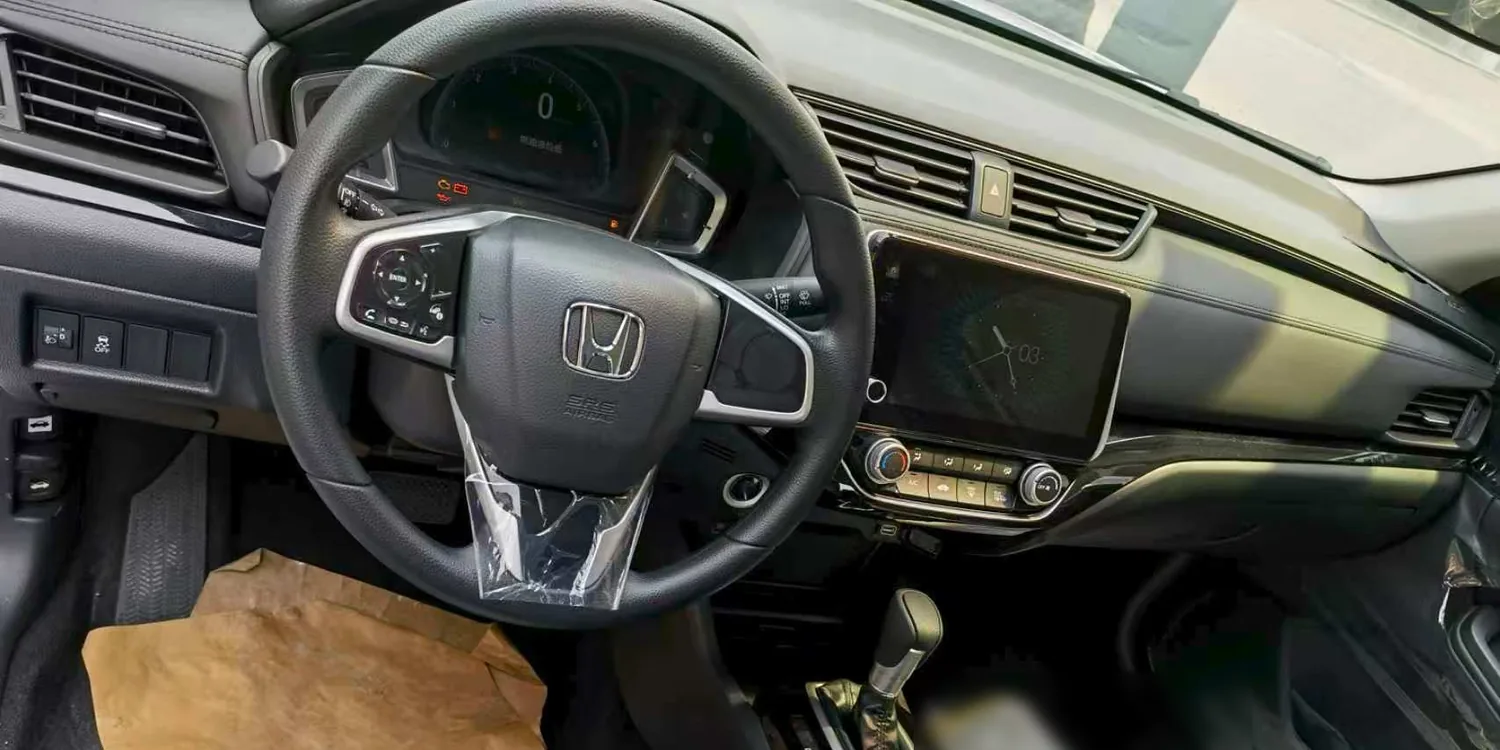
A car built for China is engineered to sell in China: Chinese menus, Chinese online services, Chinese fuel and Chinese road signs. Most of it works anywhere. Some of it stops working the moment the car leaves Chinese mobile networks, and a few things cannot be changed after the car is built. Knowing which is which before you order avoids disappointed customers after delivery.
The short version
| Item | China-market setup | Abroad | What to do |
|---|---|---|---|
| Interface language | Chinese; some units also offer English | Varies by unit | Record the language menu of the actual unit before ordering |
| Connected services | Chinese mobile network, Chinese accounts and servers | Remote app functions, online services and updates over the air stop working | Sell the car without them; do not promise them |
| Navigation | Chinese map provider, China coverage | No useful coverage | Phone projection or an approved alternative |
| Fuel | Designed for 92 RON or higher, E10 capable, 10 ppm sulphur | Works where fuel meets that | Advise the grade in writing |
| Emissions | China 6b | Broadly comparable to Euro 6 | Confirm what your import rules accept |
| Driver assistance | Tuned for Chinese roads and signs | Core functions work; sign recognition may misread | Explain limits at handover |
| Drive side | Left-hand drive | Not registrable in many left-driving countries | Check before ordering |
| Documentation | Chinese manual and labels | Customers cannot read them | Prepare an English quick guide |
Language and the driver interface
Instrument cluster menus, the centre screen, voice control and warning messages are set up for Chinese. Whether an English option exists depends on the model, the software version and sometimes the version level of the car. Do not rely on a brochure or a different unit: ask for a video of the language settings on the actual car you are buying. Voice assistants built for the Chinese market generally understand Chinese only.
The owner's manual and maintenance booklet are in Chinese. Manufacturers publish manuals by market, and an export-market manual for a closely related model can help with general operation, but settings and warnings may differ; a short English quick-start guide written for the exact car saves a great deal of confusion at handover.
Connected services and navigation
Many recent China-market cars carry a telematics module with a Chinese mobile subscription, linked to an app and an account on Chinese servers. That system provides remote functions (locking, climate pre-conditioning, vehicle status), online navigation, music and voice services, and software updates over the air. Outside China, expect all of this to stop working: the subscription does not roam as the service requires, the app and account are tied to China, and updates are distributed through Chinese servers.
Navigation deserves a specific warning. Built-in systems on China-market cars use Chinese map data, with no useful coverage abroad. The practical alternative is phone projection, but support varies: some China-market head units offer projection standards common in China rather than the ones your customers use. Confirm which projection standards the unit supports before promising it.
Replacing the head unit with an aftermarket one is possible on some cars and a bad idea on others, because the screen often also controls vehicle settings, cameras and driver-assist displays. Where it is considered, test that every integrated function still works.
Fuel and emissions
China-market petrol cars are designed for fuel of at least 92 RON, for E10 blends sold in several Chinese provinces and for the 10 ppm sulphur limit of China 6 petrol. In markets with lower-octane standard grades, the next grade up is the safe choice; in markets with high-sulphur fuel, catalysts and oxygen sensors age faster. Engine-specific advice for the Crider's 1.0-litre turbo is in the Crider engine guide, and the general picture in fuel quality and engine selection.
China 6b is one of the stricter emission standards in force. It is broadly comparable to Euro 6 and stricter on some limits, which helps where imports face an emission threshold, provided the authority accepts Chinese certification as evidence: what each market actually accepts.
Driver assistance and road signs
Camera and radar driver-assist systems work on physics, and collision warning, emergency braking and adaptive cruise behave the same abroad. Functions that interpret the road are different. Traffic sign recognition is trained on the signs of the market the car was built for; it may misread or miss signs of a different design, and it knows nothing about local speed rules not shown on a sign. Lane keeping depends on clear lane markings, which vary widely between markets. Explain these limits to customers at handover rather than after a complaint.
Smaller differences worth knowing
- Radio. FM reception is unaffected almost everywhere. On AM, China uses 9 kHz channel spacing while the Americas use 10 kHz, so a China-market radio may not tune American AM stations cleanly.
- Units. Speedometers read in km/h; markets that use miles need a customer explanation or a conversion label.
- Labels. Airbag, tyre pressure and fuel filler labels are in Chinese. Some customers, fleets and authorities ask for English or local-language equivalents; overlay labels can be prepared before shipment.
- Climate. China-market cars are sold from regions with winters of minus 30 °C to regions with summers near 40 °C, so their heating and cooling systems cover a wide range. They do not come with a separate hot-climate specification package, so in very hot markets keep the cooling system and air-conditioning condenser clean and serviced.
Drive side cannot be changed
China drives on the right, and China-market cars are left-hand drive. Many countries that drive on the left do not register left-hand-drive passenger cars at all, and conversion of a modern car is rarely practical. This is the first thing to check, before price or specification: LHD or RHD for your market.
A pre-order checklist
- Is left-hand drive registrable in your market for private and commercial use?
- Which interface languages does the actual unit offer? Get a video.
- Which phone projection standards does the head unit support?
- Which connected features will you not sell, and have you told the customer?
- Does your market's fuel meet 92 RON, and what sulphur level is typical?
- Does your import authority accept China 6b certification?
- Who writes the English quick guide and labels, and when?
We answer these for every car we offer, including the Honda Crider 180 Turbo; the model-specific notes are in the Crider buyer guide.
Honda, Crider and Honda SENSING are trademarks of Honda Motor Co., Ltd. CZJ Motors is an independent vehicle exporter and is not affiliated with, authorised by or endorsed by Honda Motor Co., Ltd. or GAC Honda Automobile Co., Ltd. The names are used only to identify the genuine vehicles we supply and describe.