
This guide is written for dealers, distributors, fleet operators and procurement teams importing new vehicles from China into Saudi Arabia. It covers the compliance regime, the shipping route, the landed cost structure and the segments that actually sell, rather than repeating generic advice.
A note on accuracy: duty rates, levies and conformity programmes change. The structural facts below are stable, but confirm current rates and procedures with your customs broker before you sign a contract.
1. Import snapshot: Saudi Arabia
| Drive side | Left-hand drive. |
|---|---|
| Main entry port | Jeddah Islamic Port (Red Sea), King Abdulaziz Port Dammam (Gulf) |
| Transit from China | Roughly 20-30 days from the main Chinese ports, depending on whether the routing is Red Sea or Gulf |
| Conformity regime | SABER platform with SASO conformity certificates |
| Region | Middle East |
2. Why import vehicles from China to Saudi Arabia
- Very large fleet renewal demand across logistics, construction and government sectors
- Pilgrimage transport creates sustained demand for high-capacity coaches on a scale few markets match
- Major infrastructure programmes drive demand for trucks, buses and special purpose vehicles
- Chinese supply is competitive across the commercial vehicle segments where demand is strongest
3. What sells in Saudi Arabia
Demand in Saudi Arabia concentrates in the following segments. Each links to the matching part of our catalogue, where every model carries a real specification table rather than a photo and a phone number.
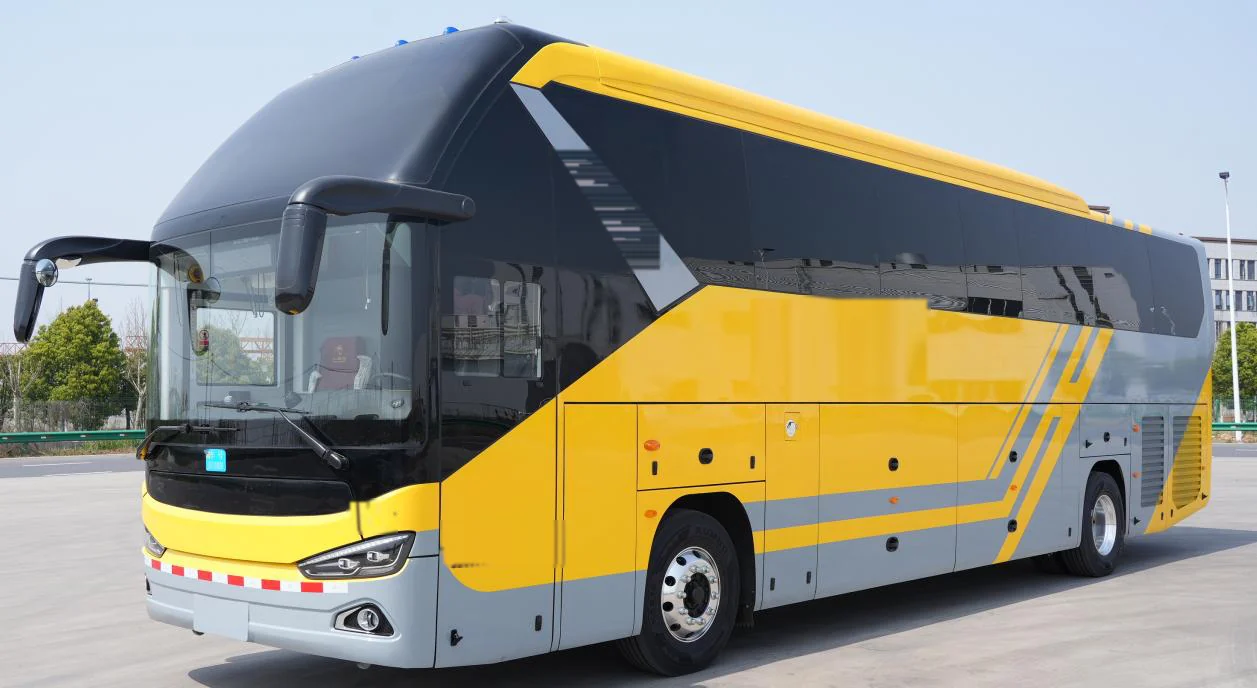
- 49-seat intercity coaches for pilgrimage and charter transport
- Light buses for hotel, staff and airport transfer
- Medium and box body trucks for logistics
- Pickups and crew cabs for construction and oilfield service
- SUVs for corporate and government fleets
Browse by segment: Passenger Vehicles, SUVs & Pickups, Commercial Trucks, Vans & MPVs, Buses & Coaches, Special Purpose Vehicles.
4. Compliance you must confirm before production
SABER platform with SASO conformity certificates. Every shipment needs a Product Certificate of Conformity registered on the SABER platform before a Shipment Certificate can be issued. The registration is done against the specific consignment, so it has to be started while the vehicles are still in China.
Drive side. Left-hand drive. Confirm this in writing in the specification annex, because it changes the production line the vehicle is built on and cannot be corrected after the fact.
The sequence that avoids trouble is always the same: freeze the specification, obtain the conformity documentation against that frozen specification, then book the production slot. Approvals issued against a specification that later changes are worthless, and the change is usually something small that nobody thought to report, such as a different tyre size or lighting unit.
5. The import process step by step
- Specification sheet. Drive side, powertrain, battery capacity for electric models, seating, colour, tyres, air conditioning and equipment level, written down and signed.
- Compliance check. Confirm the SABER platform with SASO conformity certificates requirement and any import permit you must hold before the vessel sails.
- Contract. Quantity, unit price, Incoterm, payment terms and delivery window, with the specification sheet attached as an annex.
- Production and reporting. Chassis numbers and production photos, with a checkpoint before final assembly so configuration errors are caught while they are cheap to fix.
- Pre-delivery inspection. Every unit inspected and photographed. For electric models, battery state of charge recorded to the shipping line limit.
- Pre-shipment conformity inspection. Carried out in China under the SABER platform with SASO conformity certificates programme. This cannot be done after arrival.
- Shipment. Loading and sailing to Jeddah Islamic Port (Red Sea), King Abdulaziz Port Dammam (Gulf).
- Clearance and registration. Duty and taxes paid, inspection completed where required, plates issued.
6. Shipping route and transit time
Route. Jeddah Islamic Port (Red Sea), King Abdulaziz Port Dammam (Gulf)
Transit. Roughly 20-30 days from the main Chinese ports, depending on whether the routing is Red Sea or Gulf
Mode. Roll-on/roll-off is normally cheaper per unit at volume and is effectively the only option for buses and heavy commercial vehicles. Container shipping reaches more ports, protects the vehicle from weather and handling, and lets accessories and spare parts travel with the unit. We quote both where both are available on the route. Full comparison: RoRo or container shipping.
7. What makes up the landed cost
Comparing vehicle prices between exporters is the wrong comparison. What decides your margin is landed cost. In Saudi Arabia that is built from:
- Customs duty on the CIF value
- VAT on the duty-inclusive value
- SABER certification fees per consignment
- Port handling at Jeddah or Dammam
- Inland transport to Riyadh or other inland cities
We deliberately do not publish duty percentages, because they change and a stale number on a website is worse than no number. Ask your customs broker for the current rates against the specific HS code and powertrain, and build the comparison on the total rather than the invoice value.
8. Electric vehicles in Saudi Arabia
Electric adoption is policy-driven and concentrated in the major cities and new development zones. For long inter-city routes across desert, range-extended and conventional powertrains remain the practical specification, and battery thermal management is essential for anything electric.
The decision rule we use with buyers: match the powertrain to the duty cycle and the charging reality, not to the longest range figure on the brochure. More on this in battery electric or range extender.
9. Common mistakes Saudi importers make
- Starting SABER registration after loading, when it must be completed against the consignment beforehand
- Specifying standard cooling instead of high ambient specification for desert operation
- Ordering coaches without confirming the seating layout and luggage capacity the operator actually needs
- Treating after-sales as an afterthought on large fleet orders, where downtime cost dominates purchase price
10. How to check an exporter before you pay
- Ask for the export licence and the company registration, and check the name on them matches the bank account you are asked to pay.
- Ask which specification sheet the quotation is based on. An exporter who quotes before specification is quoting a vehicle that does not exist yet.
- Ask directly whether they have shipped to Saudi Arabia before, and what the SABER platform with SASO conformity certificates procedure involved. The answer tells you quickly whether they know the route.
- Ask what the pre-delivery inspection includes and whether you receive a photo report before loading.
- Ask what happens if a unit arrives damaged, and get the answer in writing before the deposit.
- Ask about parts. An exporter with no answer on spare parts is an exporter you will not hear from after delivery.
11. Frequently asked questions
What is SABER and when does it need to be done?
SABER is the electronic conformity platform. A Product Certificate must be registered and a Shipment Certificate issued against the specific consignment before it arrives. We start this while the vehicles are still in China.
Can you supply coaches for pilgrimage transport?
Yes. Our 12.5 metre coach seats 49 passengers plus driver and courier, and is supplied in left-hand drive with the interior, luggage capacity and livery specified per order.
Which port should I use?
Jeddah for the western region and pilgrimage routes, Dammam for the Eastern Province and Gulf-side operations. We quote to whichever suits your inland destination.
Do you supply vehicles specified for desert operation?
Yes. High ambient cooling, dust protection, tyre specification and battery thermal management are specified explicitly rather than assumed.
12. Other markets we cover
- Import vehicles from China to the United Arab Emirates — Middle East
- Import vehicles from China to Peru — South America
- Import vehicles from China to Kazakhstan — Central Asia
If you are importing into Saudi Arabia, send us the segment you need, the quantity and your target arrival month. We will reply with a specification sheet, the SABER platform with SASO conformity certificates document list for your consignment, and pricing on both shipping modes.