
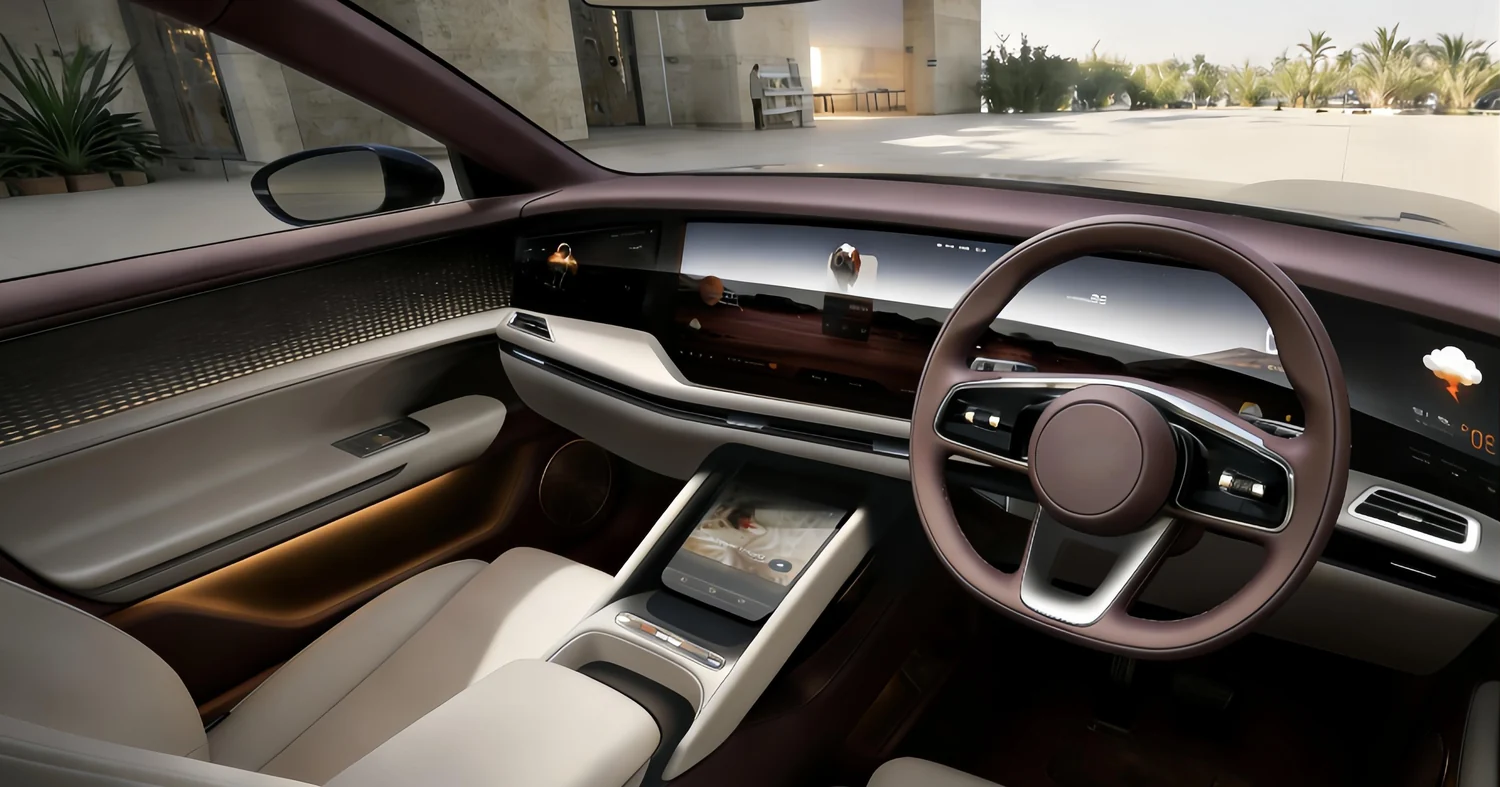
La position du volant est une décision liée au marché, pas une préférence
Environ un tiers de la population mondiale circule à gauche et a besoin de véhicules à conduite à droite. Si vous importez au Royaume-Uni, en Irlande, au Japon, en Australie, en Nouvelle-Zélande, en Inde, au Pakistan, au Bangladesh, au Sri Lanka, en Thaïlande, en Malaisie, à Singapour, en Indonésie, au Kenya, en Tanzanie, en Ouganda, en Zambie, au Zimbabwe, en Afrique du Sud, au Botswana, en Namibie, au Mozambique, au Népal, au Guyana, au Suriname ou dans la plupart des îles des Caraïbes, vous avez besoin d'un véhicule RHD. L'importation de véhicules LHD sur ces marchés est soit illégale, soit fortement réglementée.
Ce qui change réellement dans un véhicule à conduite à droite
Les acheteurs supposent parfois que RHD signifie simplement déplacer le volant. Dans un véhicule RHD fabriqué en usine, les modifications vont bien plus loin :
- Ensemble de direction et de pédales inversé, y compris la colonne de direction, la géométrie de la crémaillère et le boîtier de pédalier.
- Tableau de bord et casquette des instruments conçus comme des pièces distinctes, et non comme une version retournée de la pièce LHD.
- Cinématique des essuie-glaces inversée afin que le balayage côté conducteur soit correct.
- Répartition du faisceau des phares adaptée à la circulation à gauche, ce qui constitue une exigence légale dans la plupart des marchés RHD.
- Faisceau électrique, conduits HVAC et servofrein repositionnés.
- Rétroviseurs extérieurs, ancrages des ceintures de sécurité et calibrage des airbags revalidés pour la configuration inversée.
Pourquoi les véhicules convertis présentent un risque
Certains exportateurs proposent des véhicules LHD convertis en RHD après leur production. Ces conversions peuvent passer une inspection superficielle tout en échouant sur les éléments essentiels : un déclenchement des airbags calibré pour la position d'assise d'origine, un cheminement des conduites de frein qui n'a jamais été testé en collision et des blocs optiques qui projettent toujours la lumière vers la circulation venant en sens inverse. De nombreux marchés RHD refusent désormais l'immatriculation des véhicules convertis, et les assureurs peuvent refuser de les couvrir. Si le prix RHD proposé par un fournisseur semble exceptionnellement bas, demandez si le véhicule a été construit en RHD sur la ligne de production ou converti ultérieurement.
Effet sur le délai et le coût
La production RHD en usine ajoute généralement deux à quatre semaines au délai, car les unités RHD sont fabriquées par lots plutôt qu'en continu. Concernant le coût unitaire, la différence est généralement modeste pour les modèles produits en grande série et plus importante pour les modèles de niche dont l'outillage RHD est peu utilisé. Pour les véhicules à usage spécial et les châssis sur plateforme, le RHD fait souvent l'objet d'un devis par projet plutôt que d'une majoration fixe.
Flottes mixtes et marchés en transition
Quelques marchés autorisent les deux configurations ou sont en phase de transition. Dans ces cas, les facteurs déterminants sont généralement la valeur de revente, la disponibilité des pièces et la familiarité des conducteurs plutôt que la réglementation. Si vous vendez dans plusieurs pays voisins soumis à des règles différentes, il est normalement moins coûteux de scinder la commande en un lot LHD et un lot RHD que d'importer une seule configuration et d'en convertir une partie ultérieurement.
Points à confirmer avant la commande
- L'exigence légale dans le pays de destination, y compris toute exemption applicable aux véhicules à usage spécial ou agricoles.
- La confirmation écrite, dans l'annexe technique, que le véhicule sera construit en usine en RHD.
- La spécification de la répartition du faisceau des phares et sa conformité avec votre inspection d'immatriculation.
- Les unités du compteur de vitesse : kilomètres par heure, miles par heure ou double graduation.
- La disponibilité en stock des pièces de rechange propres aux composants RHD ou la nécessité de les commander avec les véhicules.
Chaque modèle de notre gamme peut être développé en conduite à gauche ou à droite. Indiquez le pays de destination lorsque vous demandez un devis et nous confirmerons la configuration de conduite, le délai ainsi que les documents d'homologation correspondants.