
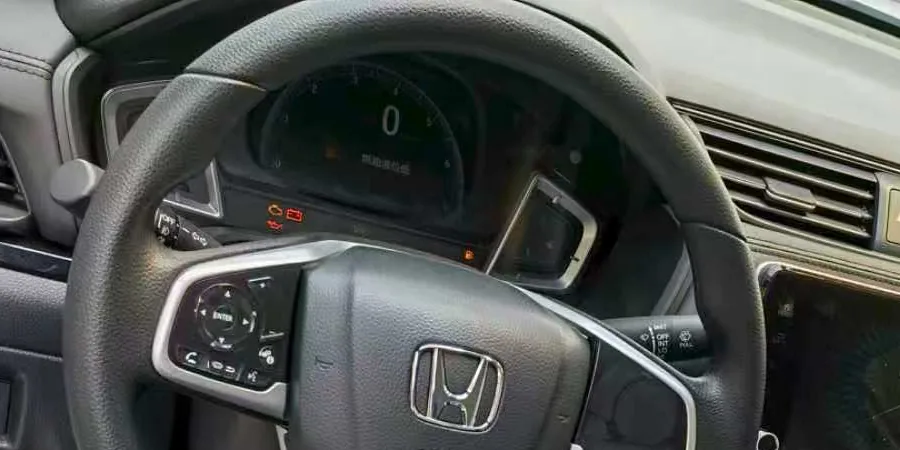
Digital odometers did not end mileage tampering; they made it quieter. Tools that rewrite an instrument cluster's memory are cheap and widely sold, and a rolled-back reading leaves nothing visible on the dashboard. The defence is cross-checking, because a car records the distance it has travelled in more places than the odometer, and because wear cannot be reprogrammed.
Why it matters more in export
Mileage sets the price of a used car, but it also sets its maintenance: when the transmission fluid, spark plugs, brake fluid and suspension parts are due. A car with twice the kilometres it shows arrives with its major services overdue and its wear parts near the end. Export makes the problem worse. The car's service and inspection history stays in the country of origin, the buyer usually inspects at a distance, and a reading changed before export is very hard to challenge afterwards.
How tampering is done now
Most modern cars store the odometer reading in the instrument cluster, and often in one or more other control modules as a backup. Tampering tools either write a new value through the diagnostic socket or, on some cars, require the cluster to be removed so its memory chip can be rewritten. A careful operator changes every module that stores the value; a careless one changes only the cluster. That difference is what a diagnostic check can find.
Where else the mileage is recorded
Other control modules
Depending on the make, engine, transmission, body and airbag control modules may store total distance, or the odometer reading at which each fault code was recorded. A professional diagnostic tool with coverage for the make can often display these values. A fault code stored at 148,000 km on a car showing 62,000 km ends the discussion.
Service records
- Dealer and workshop systems record the reading at every visit. Ask for printed history, not a stamped booklet, which is easy to fake.
- Look for oil-change reminder stickers on the windscreen, door frame or under the bonnet, and for mileage written on replaced parts or filter housings.
Inspection, insurance and registration records
In countries that record mileage at periodic roadworthiness tests, the test history shows the sequence of readings. Insurance claim records often include the mileage at the time of the claim. Readings that go down between records, or stay flat for years on a car in daily use, need an explanation.
Dated parts
Tyres, batteries and glass carry date codes. A car showing 30,000 km that is on its second set of tyres and third battery has probably done more than 30,000 km.
Wear that cannot be reset
Compare the wear against the claimed reading. Individual items vary with use; a consistent picture across several of them is what counts.
- Steering wheel rim at the ten-to-two position: shine, flattened grain or worn stitching
- Gear selector and handbrake switch: worn finish and lettering
- Pedal rubbers: the brake pedal in particular wears on its left side in automatics
- Driver's seat: the outer bolster, where the driver slides in, wears and creases first
- Driver's carpet: a worn heel patch under the accelerator
- Door sill and switches: scuffing on the driver's sill, worn window switches and steering column controls
- Front end: stone chips on the bonnet leading edge and bumper, pitting on the windscreen
- Brakes: a lip at the outer edge of the discs
Be suspicious of new pedal rubbers, a new steering wheel cover or new seat covers on a car showing moderate mileage: they are sometimes fitted precisely because the originals told the truth.
Does the story add up?
Divide the reading by the car's age and ask whether the result fits its history. A private car used for commuting, a company car and a car used for taxi or ride-hailing work cover very different distances in a year. A former fleet car with the annual mileage of a weekend runabout is not impossible, but it is exactly the kind of claim that needs records behind it.
Look also at the instrument cluster itself: scratches on trim screws, marks around the cluster surround or a cluster with a different date code from the rest of the dashboard suggest it has been removed.
What a rolled-back reading costs you later
The price difference is only the first loss. Maintenance schedules are written against distance, so a car with hidden kilometres arrives with services the booklet says are years away already overdue:
| Item | Why hidden distance matters |
|---|---|
| Automatic or CVT fluid | Often never changed if the owner believed the reading; overdue fluid is a leading cause of transmission failure |
| Spark plugs and ignition coils | Worn plugs overload coils and cause misfires that damage the catalyst |
| Timing belt, where fitted | A belt past its interval can break and destroy the engine |
| Suspension bushes, shock absorbers, wheel bearings | Wear is gradual and expensive to catch up on all at once |
| Brake discs and pads, tyres | Budgeted as years away, needed now |
For a dealer, the larger cost is reputational: the customer who buys the car finds out at the first proper service, and blames the seller they can reach.
If you discover it after purchase
- Stop using the car for anything that could be argued to have caused the wear you are relying on as evidence.
- Preserve the evidence: diagnostic reports showing stored mileage values, printed service history, photographs of wear points, and the seller's written statements about the mileage.
- Notify the seller in writing, citing the contract clause, within the claim period the contract sets.
- Obtain an independent inspection report; a claim resting on your own opinion rarely succeeds across borders.
A checklist for buying at a distance
- Photograph the odometer with the engine running and no warning lamps lit.
- Run a diagnostic scan with make-specific coverage; ask for any mileage values stored outside the cluster.
- Obtain printed service history and compare the readings in sequence.
- Photograph the wear points listed above, in daylight.
- Record the date codes of the tyres and battery.
- Confirm the VIN before anything else, so that the records you are checking belong to this car: how to decode a Chinese VIN.
Protect yourself in the contract
Include a warranty that the displayed mileage is genuine, with a defined remedy if it is shown to be false. Agree who carries out the arrival inspection and within how many days a claim must be made. An honest seller signs this without hesitation, and a seller who will not has answered your question.
Odometer fraud often travels with other hidden history. The same inspection should look for water damage, covered in how to spot a flood-damaged car.