
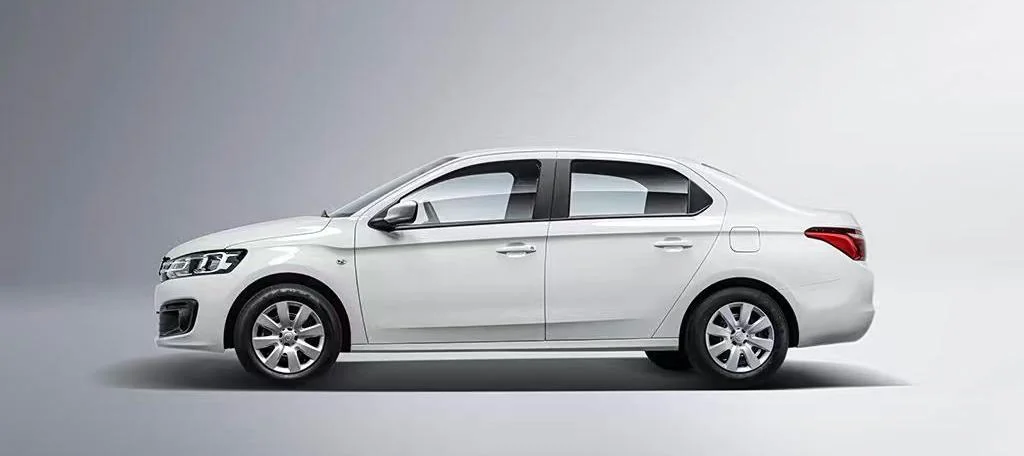
A CKD and an SKD quote rarely describe the same shipment, so comparing the headline kit price alone tells you little. To choose a kit stage, map every cost line to either the Chinese supplier or your local assembler, then price the local side with your own inputs before placing a deposit. This guide shows how to do that for one model and one annual volume, and what to ask both suppliers so their quotations can be read side by side.
Define the kit boundary first
CKD (completely knocked down) and SKD (semi-knocked down) are commercial labels, not fixed standards. Each supplier sets its own cut-off point, so a "CKD" kit from one source and an "SKD" kit from another can overlap. "Partially assembled" is a third category where the supplier ships a rolling or painted body plus modules.
What changes at each stage:
- What is in the box: a deeper CKD kit can include a bare body-in-white, loose panels and a wiring harness; an SKD kit may arrive with the body already painted and the powertrain pre-installed.
- What your site must add: welding, paint, glass bonding, trim, fluids and final inspection all sit on the local side when they are not in the kit.
- Shipping volume and packing: crates, racks, returnable containers and whether the supplier charges for packaging or deposits.
- Bill of materials (BOM) granularity: the kit should be quoted at part-number level so you can count what is and is not included. Ask for the packing list in the same numbering system as the BOM.
Build the comparison table
For each quote, place the same line items in the same order. A workable template:
| Cost line | Paid to supplier | Paid locally | Question to ask before signing |
|---|---|---|---|
| Kit price per unit | Yes | — | What BOM revision and model year does this price cover? |
| Packaging and crates | Confirm | Handling only | Are returnable racks charged or refunded? |
| Freight basis | Confirm | Port charges | Is it FOB, CFR or CIF, and which Incoterm applies? |
| Import duty, VAT, excise | No | Yes | Which tariff heading and rate applies to the kit? Verify with the customs authority. |
| Local labour | No | Yes | How many station hours per unit, and at what burdened rate? |
| Paint and primer | No | Yes | Is paint in the kit or local, and who owns colour-match risk? |
| Utilities and compressed air | No | Yes | Estimated kWh and air demand per unit. |
| Tooling and fixtures | Confirm | Confirm | Are jigs, lift points and fixtures in scope or amortised? |
| Rework and rejected parts | No | Yes | Who pays for a part that fails at inspection? |
| Spare parts buffer | Confirm | Confirm | What is the initial recommended stock list? |
The last two columns force every line into one owner. Where a number is not supplied, leave it blank and add it to your RFQ rather than filling it with a guess. For a country-level import view, see Import Vehicles from China to Ghana: Costs, Rules and Shipping.
An illustrative worked calculation
This example is illustrative only and uses assumed inputs, not market data. Take one model at 600 units per year, split across 12 shipments of 50 units.
Assumed inputs:
- Kit price: X per unit (supplier quote).
- Freight and insurance: Y per unit (carrier quote, same for both stages for comparison).
- Import duty, VAT and excise: rate percentages supplied by your customs broker and confirmed with the authority.
- Local labour: L hours per unit at H cost per hour (your site).
- Paint: P per unit local; assumed zero if the supplier pre-paints.
- Utilities: U per unit.
- Rework allowance: R percentage of kit value (your estimate).
Total landed cost per unit = X + Y + duty + VAT + excise + (L × H) + P + U + R. Run the formula twice, once with CKD inputs and once with SKD inputs, and keep the assumptions page attached. Exclusions to state openly: warranty reserve, financing cost, port demurrage, tooling amortisation, homologation fees and any local-content premium.
The point is not the number. It is that changing one assumed input, such as labour hours or a duty rate, shows you which kit stage is more exposed to that risk. Pair the model with the Total Cost of Ownership for Imported Fleet Vehicles approach when the fleet will run the vehicles.
Confirm local requirements before signing
Kit stage is only viable if your site can complete the work the supplier leaves out. Confirm with the relevant national authority and with your own engineers:
- Assembly site: building area, floor loading, lift capacity and vehicle movement space for the chosen model dimensions.
- Welding and paint: whether your site has the equipment and whether the process is accepted for the registration route you intend. Verify current requirements with the authority.
- In-process inspection: torque records, leak tests, electrical checks and end-of-line sign-off that the authority may inspect.
- Local-content and licensing: any local-content thresholds, assembly licences or type-approval conditions. These change; confirm the current text with the authority, not with a supplier.
- Homologation: which documents the supplier issues and which your importer must file.
For country-specific project checks, the Colombia CKD Electric Vehicle Projects: Check IAMAS Fit Before Quoting guide shows how eligibility and project scope interact.
Verify the supplier before you compare price
A cheaper kit is not cheaper if the BOM does not match or a missing part stops the line. Request the following from both kit suppliers:
- BOM and part numbers: the same numbering as the packing list, with revision and model year stated.
- VIN allocation: how VINs are issued to kits, and what documentation follows each unit.
- Missing-part and damage process: how a shortage at unpacking is claimed, within what window, and who pays freight on replacement.
- Spare parts and after-sales: the initial recommended stock list, parts catalogue and service documentation.
- Production-readiness evidence: process audits, line photos, a sample inspection report. Treat claims as claims until you see dated documents.
Use the X07 Light Truck CKD/SKD Quotes: Verify the Kit Before You Commit checklist as a model, and ask for the same package for a light van or electric sedan.
Turn the comparison into one RFQ
Send the same RFQ to both suppliers so the replies can be read side by side:
- State the model, configuration and annual volume with shipment cadence.
- Ask for the BOM and packing list at part-number level for each kit stage offered.
- Ask each supplier to mark which lines are in the kit and which the assembler must supply.
- Request the Incoterm, packaging specification and container or rack loading plan.
- Request the VIN and documentation package, plus the missing-part and damage process.
- Ask for the local-content and homologation documents they can provide, and confirm the rest with the authority.
When the two replies arrive, paste them into the table above. CZJ Motors can supply kit specifications for the T02 Compact Electric Sedan and the X06 9/14 Seat Van in CBU, SKD or CKD form so you can test the model on a real BOM.
FAQ
Is CKD always cheaper than SKD?
No. CKD usually shifts more work to your site, which can raise local labour, paint, utilities and rework cost. Whether it wins depends on your kit price, the duty treatment of each kit stage, and how efficiently your site completes the work. Build the line-item model and confirm the duty basis with the customs authority.
How do I compare two kit prices when the BOMs differ?
Ask both suppliers for the BOM at part-number level and mark every line as in-kit or local-supply. Then price the local lines with your own inputs. If one kit includes painted body and the other does not, add paint to the second before comparing.
What documents should I expect with each kit?
Ask for the BOM, packing list, VIN allocation record, inspection report and spare-parts list, and ask which homologation or local-content documents the supplier can issue. Which documents your authority requires depends on the country and should be confirmed with that authority.
Should I commit to one stage before seeing both quotes?
No. Run the same RFQ for both stages, apply the model to both replies and compare the completed tables. Commit only when the local side costs are priced and the duty and tax basis has been confirmed with the authority.
Procurement brief
To move from model to quotation, share the proposed model and kit stage, the annual volume and shipment cadence, the destination country and port, and any existing assembly site or project scope. Include the BOM and packing-list requirements you intend to apply. With that, discuss requirements and request a quotation you can place directly into the comparison table.