
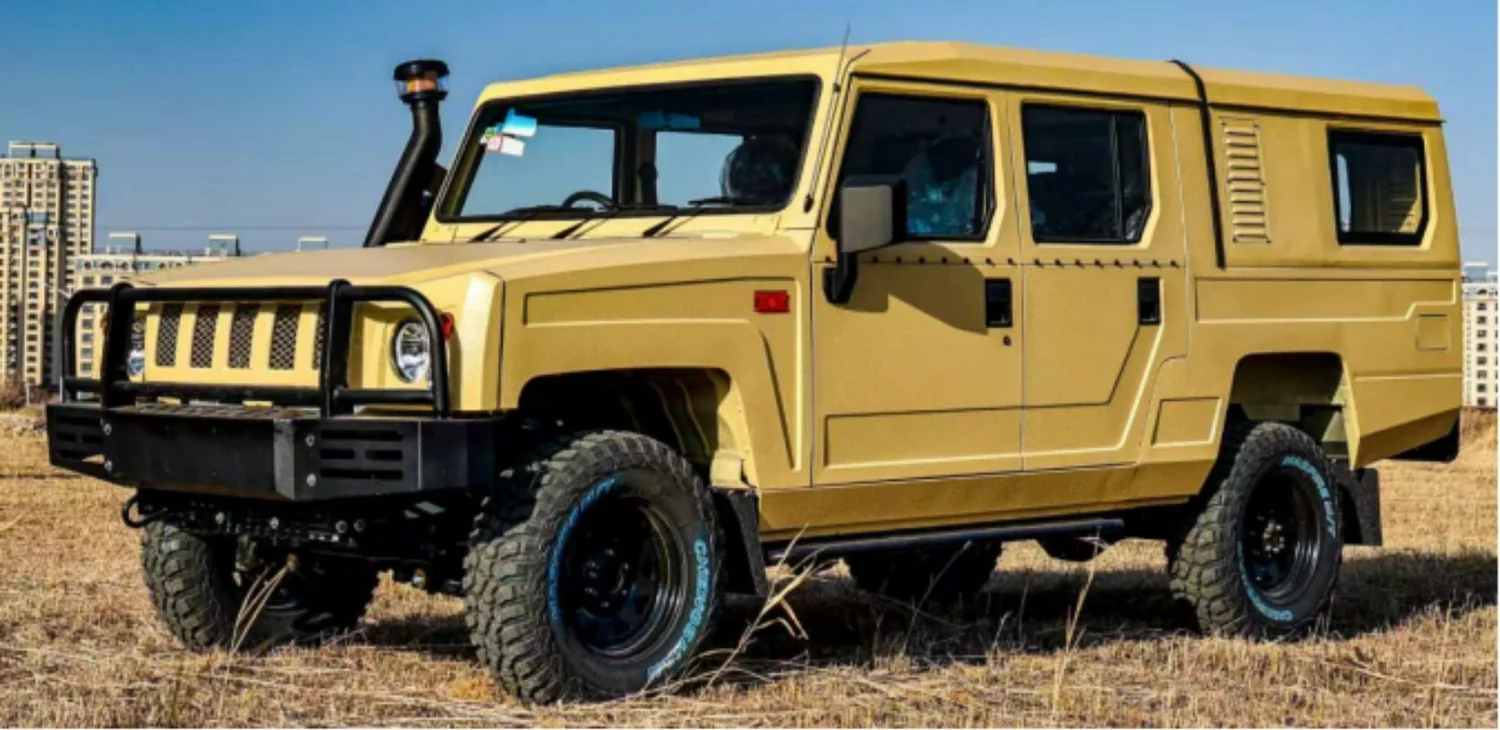
The T08 may suit oilfield work where a five-seat crew cab, part-time 4×4 and compact cargo box match the route and daily load. Its stated gross vehicle mass (GVM) is 3,955 kg, but that figure alone does not establish usable payload: confirm axle ratings, payload definition and the final vehicle configuration before ordering.
Match the 4×4 system to the route and terrain
The T08 is listed with a front-engine, part-time four-wheel-drive layout and a mechanical, manually shifted two-speed transfer case. This is a specific driveline arrangement, not a substitute for checking how the vehicle will be used. Map the route by surface, gradient, loose ground, wet or muddy sections, and the frequency of transitions between paved and unpaved roads. Ask the supplier for the approved operating instructions, including when and how to select each drive mode and transfer-case range.
Confirm whether the duty requires features not established by the listed layout, such as a locking differential, winch provision, underbody protection or a specified water-crossing capability. Do not assume these are fitted. For mixed public-road and site use, also confirm any restrictions on using 4×4 modes on firm surfaces in the manufacturer’s operating instructions.
Review the T08 4×4 Crew Cab Off-Road Truck specification against the route plan, and list required accessories separately so their mass and installation are included in the final weight assessment.
Check dimensions, clearance and site access
The stated overall dimensions are 5,110 × 1,830 × 2,025 mm, with a 3,035 mm wheelbase and a 6.5 m minimum turning diameter. Minimum ground clearance is listed as 225 mm; approach and departure angles are 42° and 29°. These figures are useful for screening, but do not guarantee access on a particular site. Check gates, ramps, drainage channels, uneven crests, parking areas, overhead restrictions and turning space against the actual route.
Ask which vehicle condition and measurement points apply to the clearance and angle figures. Then confirm the fully equipped vehicle’s dimensions, including any added steps, guards, lights, roof equipment or other accessories. A loaded vehicle may sit differently from an unladen one, so request the relevant loaded measurements or a written explanation of what the published figures represent. If site access depends on a specific obstacle, compare that obstacle with the vehicle’s actual dimensions and approach path rather than relying on a single angle figure.
Calculate crew and equipment against GVM and cargo-box size
The cab is listed for five occupants. The cargo box measures 1,410 × 1,580 × 480 mm. Check whether the tools, spare parts, safety equipment and personal gear needed for one shift can be carried within those dimensions, with appropriate restraint and protection. Confirm the box’s usable internal measurements, tie-down points and permitted loading arrangements; these details are not stated.
The listed curb weight is 2,150 kg and GVM is 3,955 kg. Subtracting the two gives a nominal difference of 1,805 kg, but this arithmetic is not a confirmed usable-payload rating. Ask how curb weight is defined and whether the figure includes fuel or fitted equipment. Get the rated payload for the exact ordered configuration, with an explicit account of occupants, fuel, accessories and any body or equipment modifications.
| Requirement | What to request | How to verify |
|---|---|---|
| Total loaded mass | Confirmed payload and vehicle weight basis | Check the build-specific weight document and weigh the completed vehicle if required by the project |
| Axle loading | Front and rear axle ratings, plus any load-distribution limits | Compare expected axle loads with the ratings using the planned crew, cargo and equipment positions |
| Cargo fit and restraint | Usable box dimensions, tie-down details and permitted loads | Measure the largest items and confirm the restraint method for the actual cargo |
| Site clearance | Measurement basis for clearance and approach/departure angles | Compare the fully equipped vehicle with site obstacles and access drawings |
| Tyres and spares | Approved tyre sizes, load specifications and spare arrangement | Match the supplied tyre details to the vehicle documents and operating plan |
For a broader method of assessing the weight calculation, see how to choose truck GVM and payload for your fleet. Do not plan a load by subtracting curb weight from GVM alone; obtain axle limits and the manufacturer’s completed-vehicle ratings.
Confirm engine, transmission, tyres and steering
The listed powertrain is a 2,360 mL diesel engine rated at 103 kW at 2,950 rpm, with maximum torque of 350 N·m at 1,500–2,400 rpm and a five-speed manual transmission. The specified tyre is 265/70R16LT 10PR. Confirm that the ordered engine, gearbox, tyre specification and spare match the offer and the fleet’s maintenance arrangements. Request the engine and transmission identification, service documentation, recommended fluids and parts information for the exact version.
Steering position is listed as LHD or RHD to order. State the required side in the purchase specification and verify it on the final configuration documents. Also confirm any requested air conditioning, electrical equipment, recovery points, protective fittings or other site-specific additions, and ask how each affects mass, axle loading and warranty or service arrangements. For import approval or registration, verify current requirements with the relevant authority and review the vehicle homologation and type-approval checks; do not assume a listed specification establishes local approval.
Request configuration and rating evidence before ordering
Before committing, obtain a written configuration sheet for the actual vehicle or order specification. It should identify the steering position, engine and transmission, drive system, tyre details, dimensions, GVM, curb-weight basis, payload, front and rear axle ratings, and any fitted options. Ask for supporting manufacturer documents where available, and ensure the commercial offer, technical specification and order all describe the same configuration.
If the truck will carry specialist equipment, request confirmation of mounting points, permitted loads and any required changes to the vehicle. Confirm how modifications affect payload, dimensions, clearances and vehicle documentation. Make local registration, road-use and site-entry checks with the relevant authorities and operator before finalizing the specification.
FAQ
Does the T08’s 3,955 kg GVM tell me its payload?
No. GVM is the stated maximum gross vehicle mass, but a usable payload figure and axle ratings are not provided here. Request confirmed ratings for the exact configuration and clarify how occupants, fuel, options and equipment are counted.
Is the 225 mm ground-clearance figure enough to confirm site access?
Not by itself. Confirm the measurement basis and check the completed, equipped vehicle against the site’s obstacles, ramps and approach paths. Clearance and angles do not establish performance on every surface or under every load.
Can five occupants and a full cargo box be carried at the same time?
The T08 is listed with five seats, but the available cargo capacity depends on the verified payload and axle limits, as well as how people and equipment are distributed. Provide the planned crew and itemized load to the supplier and request a configuration-specific weight assessment.
For a project review, share the required quantity, destination, LHD or RHD preference, route and site conditions, crew count, itemized equipment weights and dimensions, and any required accessories or approval documents. Send the T08 configuration you are considering and discuss requirements before finalizing the order.