
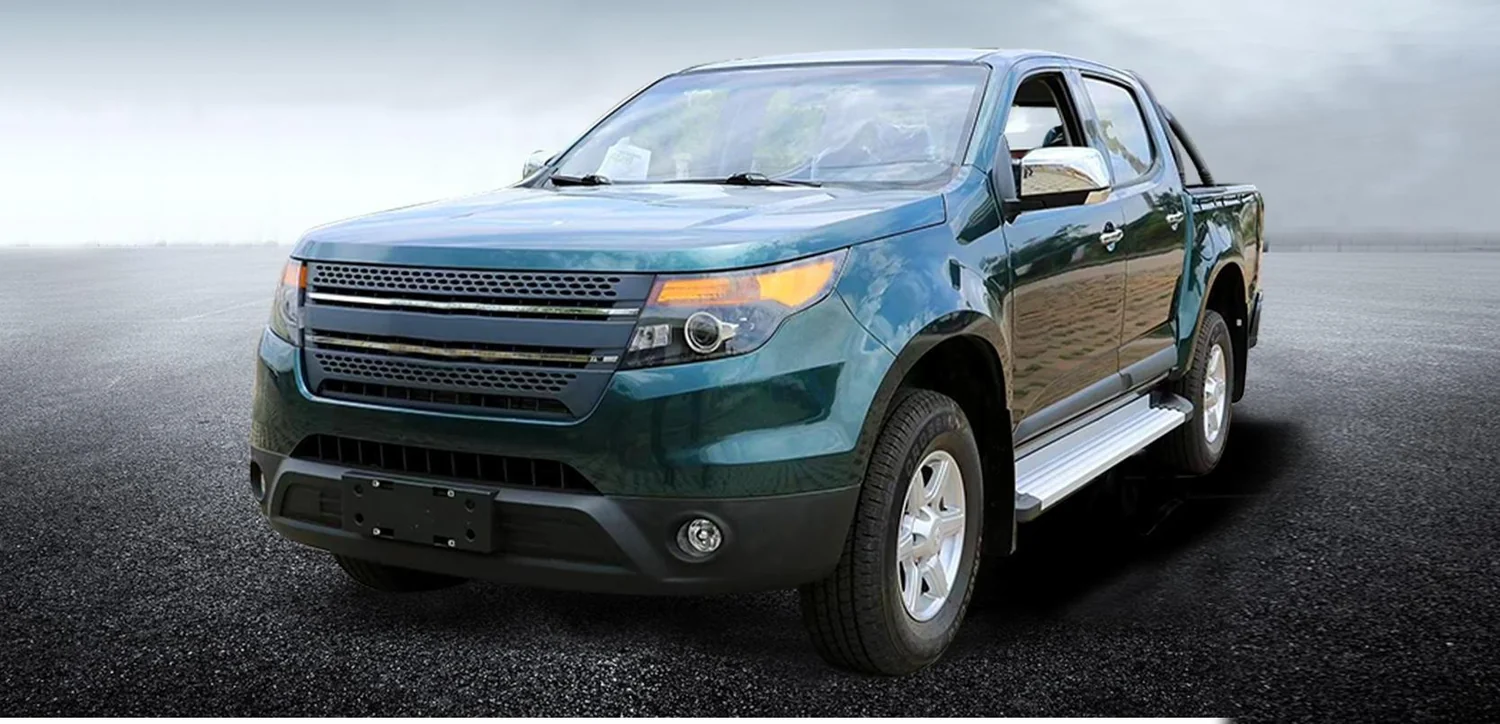
The T07 can suit an export fleet when its actual route profile, cargo requirements, charging access and steering position match the ordered configuration. Its listed specification includes a 5,660 mm double-cab body, rear-wheel drive, 96 kW output, 230 N·m torque, 300 km pure-electric range and 700 km combined range, but payload, battery details, charging performance and durability evidence must be confirmed before ordering.
Match the T07 Powertrain to Daily Fleet Routes
The T07 is listed as a battery-electric or range-extended electric double-cab pickup. The pure-electric version should be assessed against routes that return to a reliable charging point, while the range-extended version may better suit mixed urban and regional work where charging opportunities are limited. The 700 km combined-range figure applies to the range-extended configuration as listed; it should not be treated as the expected distance for every operating condition or vehicle configuration.
Start with route evidence rather than the headline range:
- Record the planned daily distance, average speed, stops, gradients, road surface and time spent carrying cargo.
- Identify where the vehicle can charge, how long it can remain there and whether several fleet vehicles will share the same equipment.
- Separate empty, half-load and full-load routes because cargo weight, tyre pressure, weather, traffic and speed can affect energy use.
- Confirm whether the range extender is permitted for the intended operation and request its fuel type, tank capacity, service schedule, emissions information and operating limits.
The listed motor output is 96 kW, with 230 N·m of maximum torque and a permanent-magnet synchronous motor. Rear-wheel drive may be suitable for paved urban delivery and regional transport, but it requires closer review for loose surfaces, steep access roads, wet conditions and frequent heavy loading. Ask for the traction-control strategy, axle rating, tyre specification, gradeability, ground clearance and thermal protection for the agreed version.
The T07 Double Cab Pickup page is a useful starting point for comparing the proposed vehicle configuration. Request a signed configuration sheet before using any specification in a tender or fleet calculation.
Check Dimensions, Cargo Use and Road Access
At 5,660 mm long, 1,885 mm wide and 1,825 mm high, the T07 needs to be checked against the fleet's parking areas, loading yards, ramps, workshops and local road restrictions. Its 2,520 mm wheelbase may help manoeuvrability compared with a longer-wheelbase commercial vehicle, but the overall body length still matters in narrow compounds and container or ferry handling operations.
The catalog entry identifies the vehicle as a double-cab pickup but does not provide payload, bed length, bed width, bed height, gross vehicle mass, curb weight, axle loads or towing capacity. These are decision-critical figures. Do not infer payload from motor power or body size.
Ask the supplier to provide:
- Gross vehicle mass and front and rear axle limits.
- Kerb weight for the exact battery, range-extender and equipment package.
- Certified payload, with a clear statement about whether occupants, tools and accessories are included.
- Cargo-bed internal dimensions, wheel-arch intrusion, tie-down points and tailgate rating.
- Towing capacity, trailer-brake requirements and any range or speed limitations when towing.
- Ground clearance, approach and departure angles, turning circle and tyre options.
- Approved body modifications such as covers, racks, refrigeration equipment or service bodies.
Load planning should use the heaviest real cargo and the number of occupants expected on duty. For a method of separating gross vehicle mass, curb weight and usable payload, see How to Choose Truck GVW and Payload for Your Fleet.
Specify Charging, Range-Extender and Service Requirements
The T07 entry gives pure-electric and combined-range figures but does not state battery capacity, charging interface, AC charging power, DC charging power, charging time, battery chemistry, thermal-management design or battery warranty. Request these details for the exact build and destination market.
A practical charging specification should cover connector type, voltage and frequency compatibility, onboard charger rating, DC charging requirements, cable supply, charge-state limits and compatibility with the depot's electrical installation. The buyer should also determine whether the vehicle can be charged safely in the expected ambient temperatures and whether charging is supported during a multi-shift operating pattern.
For the range-extended version, ask for separate information on the electric drive system and the generator or engine system. Confirm whether the vehicle can maintain operation when the battery state of charge is low, how the range extender starts, what fuel it requires, and whether it can be serviced by the buyer's existing workshop network.
Service planning should include:
- Battery, motor, inverter and high-voltage component warranty terms.
- Diagnostic equipment, technician training and high-voltage isolation procedures.
- Replacement-part identification, ordering process and expected support terms agreed in writing.
- Inspection intervals for brakes, suspension, tyres, cooling systems and range-extender components.
- Roadside recovery instructions after collision, flooding or high-voltage system damage.
Warranty coverage is not stated in the T07 product information, so it must be negotiated and documented rather than assumed. For broader fleet cost planning, use Total Cost of Ownership for Imported Fleet Vehicles, while replacing every assumption with figures from the agreed project.
Confirm LHD or RHD and Export Configuration
The T07 is listed with LHD or RHD steering available to order. Treat steering position as a production and documentation requirement, not a minor preference. Confirm the steering side on the pro forma specification, vehicle identification records, dashboard and pedal layout, lighting arrangement, mirrors, wiper pattern, cabin controls and driver-assistance calibration.
Also specify the import model: the product entry lists CBU, SKD and CKD options. The preferred route depends on local assembly capability, workshop equipment, parts control, inspection requirements and the buyer's project scope. Request a complete list of included parts for SKD or CKD supply, assembly instructions, tooling requirements and responsibility for local testing or registration.
The export configuration should state the destination, steering position, battery and powertrain version, wheel and tyre package, cabin equipment, safety equipment, language settings, charging hardware, colour, accessories and any required pickup-bed conversion. Avoid approving a generic brochure when the order depends on a particular regional configuration.
Documents and Inspection Checks Before Ordering
Before placing an order, use the following requirement-and-verification checklist. Each item should refer to the same model code, vehicle version and destination.
| Requirement to confirm | Evidence to request | Verification step |
|---|---|---|
| Payload and weight limits | Technical data sheet showing curb weight, gross vehicle mass and axle limits | Check the figures against the planned cargo, occupants, accessories and local registration category with the relevant authority |
| Battery and charging | Battery capacity, connector, AC/DC ratings, charging procedure and warranty terms | Compare the interface and electrical requirements with the depot equipment and obtain a written confirmation for the ordered version |
| Range-extender system | Engine or generator specification, fuel requirement, tank capacity and service schedule | Confirm that fuel, maintenance capability and operating permissions exist on every planned route |
| LHD or RHD layout | Signed configuration sheet and vehicle identification details | Inspect the completed vehicle, dashboard, pedals, mirrors and lighting before shipment |
| Cargo-bed suitability | Bed dimensions, tie-down details, axle limits and approved accessories | Measure the cargo and inspect a sample vehicle or clear pre-shipment evidence before approving modifications |
| Export and registration documents | Invoice, packing list, vehicle identification records, technical file and documents requested by the destination authority | Ask the importing authority or appointed customs and registration professionals to confirm current requirements |
A pre-shipment inspection should record the vehicle identification number, build date, odometer, tyres, body condition, charging equipment, warning lights, accessories and any conversion work. For country-specific import procedures, verify current rules directly with the relevant customs, transport and registration authorities because requirements can change.
FAQ
Is the T07 suitable for regional fleet routes?
It may be suitable where the route length, cargo weight, road surface and charging plan fit the selected powertrain. The listed range figures are starting points for evaluation, not a substitute for a route trial or a written operating assessment. Request separate loaded-route information for the battery-electric and range-extended versions.
Does the T07 have enough payload for commercial work?
The available product information does not state payload, gross vehicle mass or axle limits. These figures must be obtained for the exact configuration before deciding whether the pickup can carry tools, materials, passengers and accessories legally and safely.
Should a fleet choose the electric or range-extended version?
Choose based on route control and energy infrastructure. A battery-electric version is easier to assess when vehicles return to a dependable depot charger, while a range-extended version may provide more flexibility for regional routes. Compare battery, charging, fuel, servicing and warranty requirements using the same duty cycle.
Can the T07 be ordered in either steering position?
The T07 is listed with LHD or RHD available to order. Confirm the steering position in the signed order specification and inspect the completed vehicle before shipment. Also verify destination-specific lighting, documentation and registration requirements with the responsible authority.
For a procurement review, share the required T07 powertrain, LHD or RHD preference, fleet quantity, daily route distances, cargo weight and dimensions, charging location, destination country, road conditions, desired import model and any planned pickup-bed equipment. Send the existing project brief through discuss requirements so the proposed configuration can be compared with the actual fleet duty.